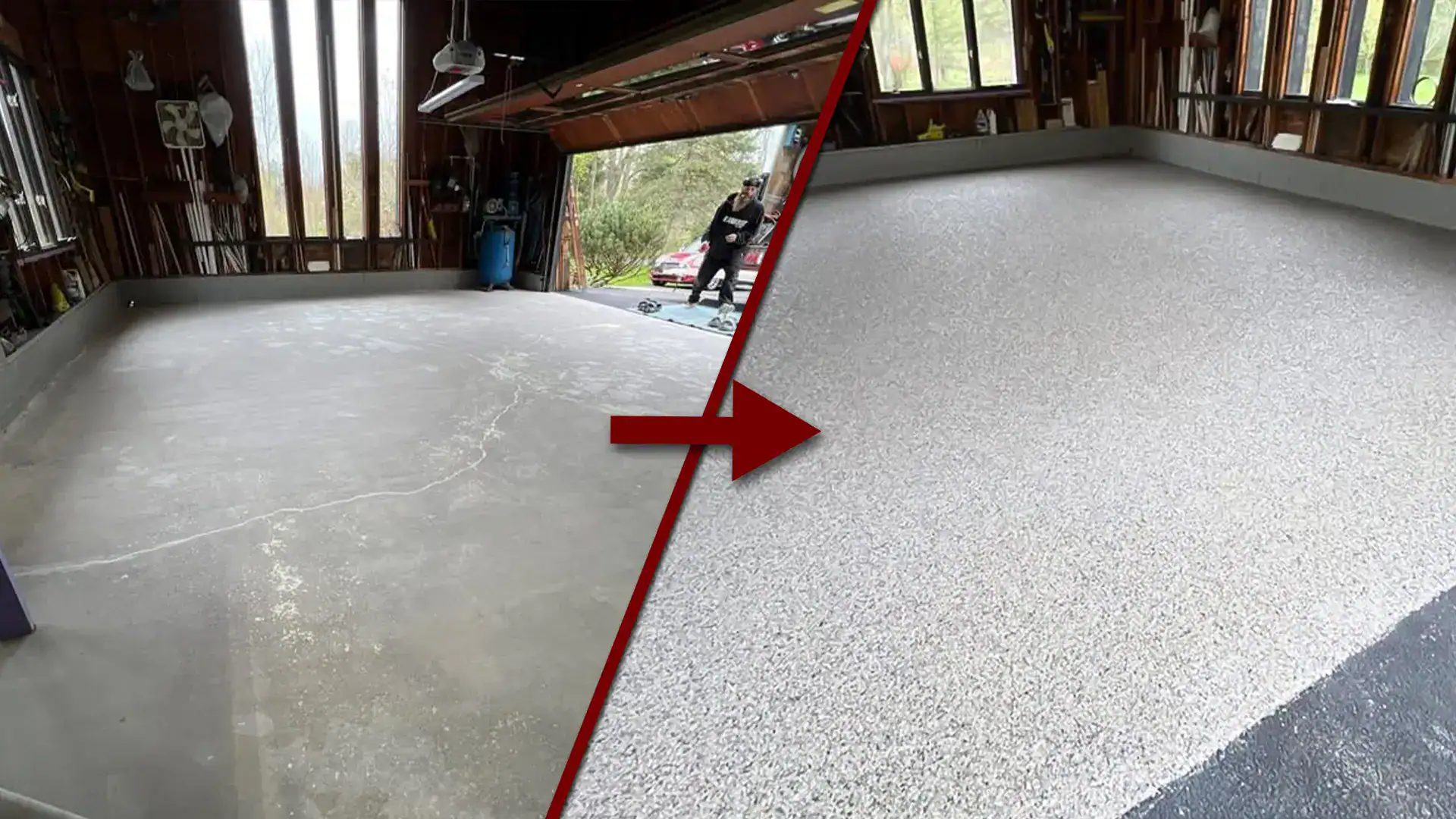
If you’re researching garage floor coatings, you’ve probably come across terms like epoxy, polyurea, and polyaspartic. While many coatings may look similar at first, the materials and installation process can make a major difference in long-term performance. A professionally installed hybrid epoxy and polyurea garage floor coating is designed to provide strong adhesion, better durability, and greater resistance to everyday wear.
Before choosing a coating for your garage, it helps to understand how these materials work together.
Epoxy Alone vs. a Polyurea Garage Floor Coating
Traditional epoxy has been used in garage floors for years because it creates a hard, durable surface. It’s also highly effective for moisture mitigation, which is essential for a long-lasting garage floor coating.
However, polyurea coatings also offer important benefits. But before we get into the benefits, we should discuss the difference between a polyurea and a polyaspartic (another term you may have heard of). A polyaspartic is a slower-curing version of a pure polyurea. The “slowed-down” polyaspartic allows installers more working time during application (…you don’t want the coating to cure mid-installation). Most coatings marketed as “polyurea” are actually “polyaspartic” coatings.
A polyurea (or polyaspartic) is a two-component coating that cures very quickly (in under 1 hour) and forms a strong bond with various substrates, including concrete. Polyurea-polyaspartic coatings are known for UV stability, stain resistance, abrasion resistance, low VOCs, and a high-gloss finish that’s easy to maintain. As such, they are superb for use as top coats in garage floor coating systems.
The Best of Both Worlds
Sadly, however, polyurea-polyaspartics are not moisture mitigating. Meaning they do not protect the coating system from moisture wicking up from below. Why? because polyurea-polyaspartic coatings can only go down thinly and cure so quickly that they fail to deeply penetrate the concrete slab. As moisture transmits upward through the porous concrete (called moisture vapor transmission or MVT), it gets trapped under the coating creating a hydrostatic pressure. The thin, poorly penetrating polyurea-polyaspartic base coat is susceptible to the upward pressure and tends to delaminate over time. (Which is why these “1-day” coatings typically include warranty exclusions to “moisture-related issues).
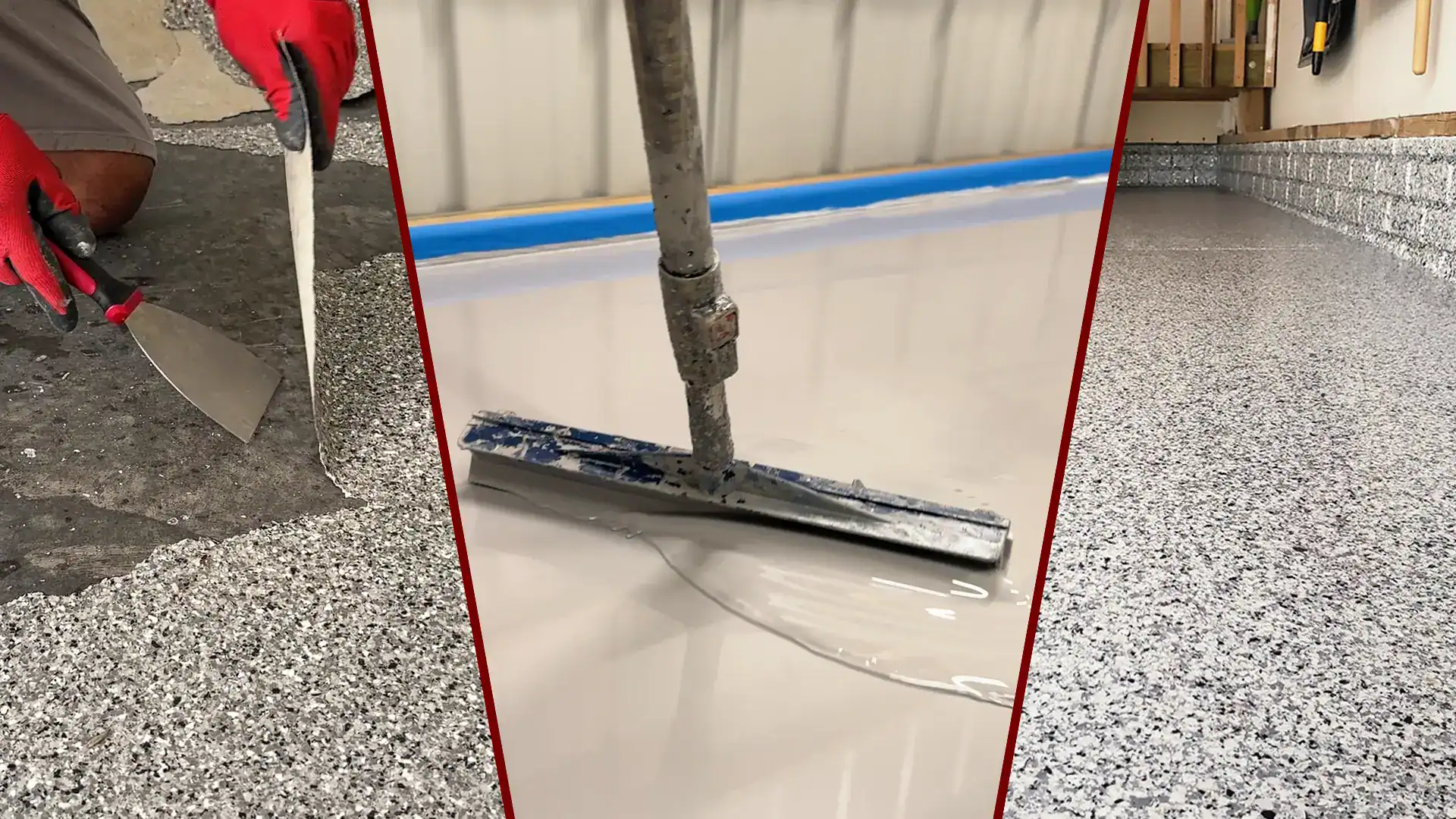
That’s why our 2-day installation process that includes a moisture-mitigating epoxy primer is crucial. Garage Floor Coating – The Great Lakes begins with mechanical grinding to open the concrete pores, followed by a moisture-mitigating epoxy base layer that creates a thick, strong bond with the slab. It cures slowly and deeply penetrates the concrete, acting as a thick moisture vapor barrier. Next comes a full-broadcast decorative flake layer, followed by two separate (not just one!) 100%-solids polyaspartic topcoats designed for long-term performance. The result is the thickest, most durable coating system around…with a warranty to match (no fine print).
Contact our team today to learn more about installing a hybrid epoxy and polyurea-polyaspartic garage floor coating built for lasting durability.
Frequently Asked Questions
Q: What is the best garage floor coating?
A: The best garage floor coating is a multi-layer system that includes a moisture-mitigating epoxy primer, full broadcast flakes, and polyaspartic topcoats.
Q: How long should a garage floor coating last?
A: A professionally installed system can last decades, while thin coatings may fail within a few years.