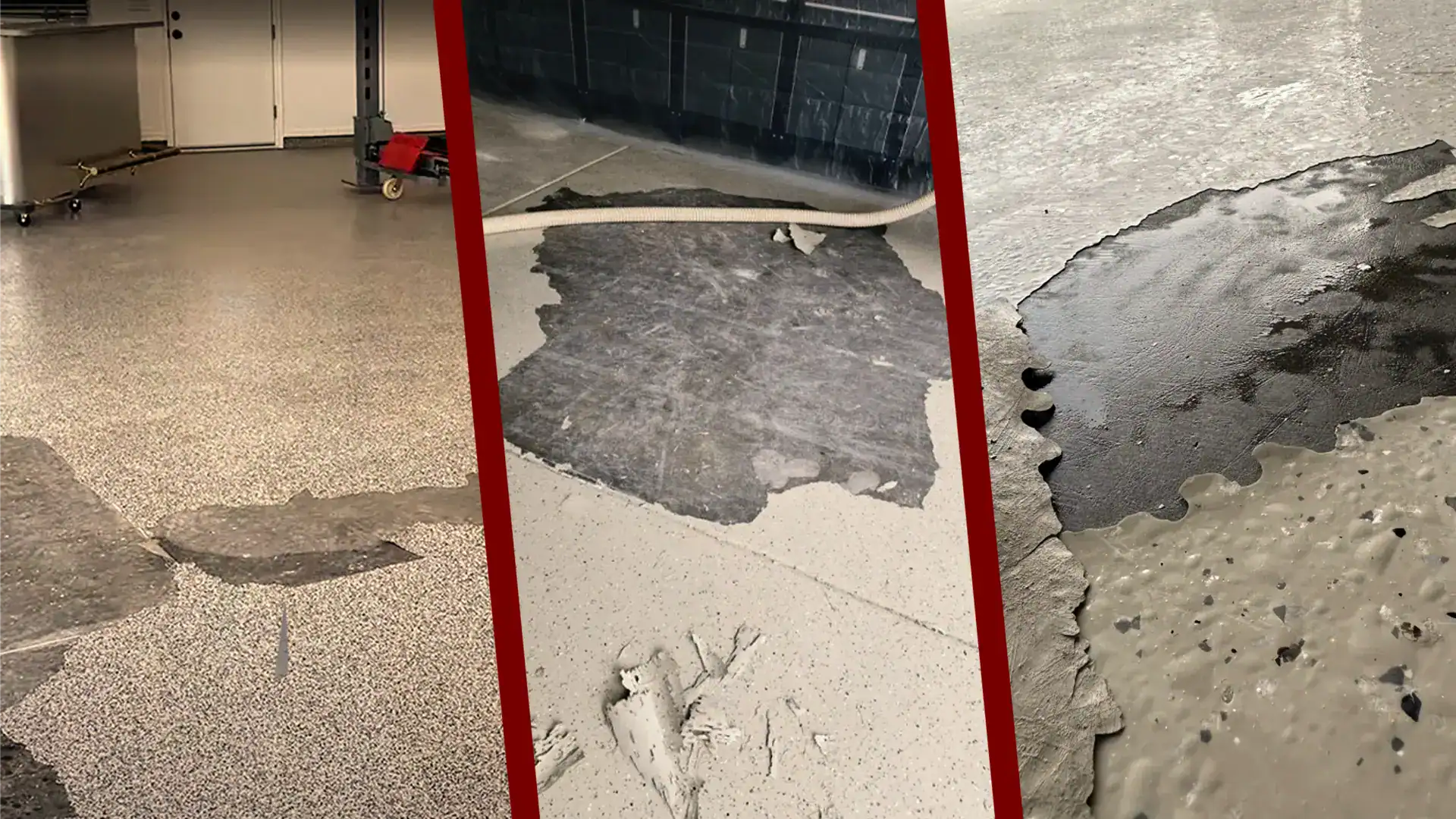
In the Great Lakes region, garage floor moisture is often blamed on snow, ice, and seasonal humidity. But concrete moisture is not a regional surprise. Every concrete slab contains moisture from the day it is poured. The real issue is whether a polyurea garage floor system is designed for moisture mitigation, or installed with a built-in excuse.
Why the Moisture Meter Appears After the Damage Is Done
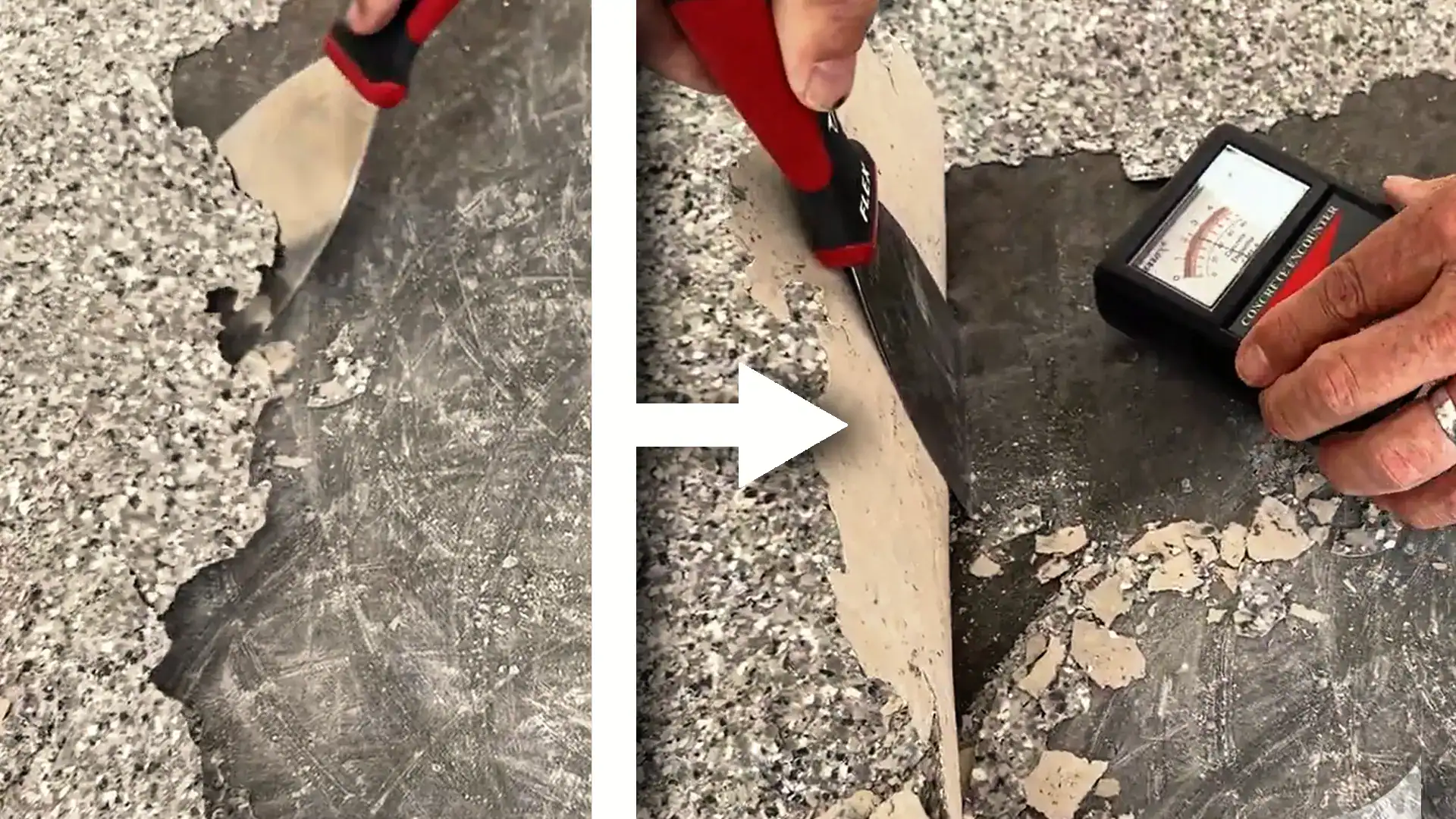
Many 1-day installers treat moisture as a post-install discovery. Hence, when a coating blisters, peels, or releases, a moisture meter suddenly becomes part of the conversation. A reading is taken directly at the failure point, where vapor pressure is highest, and that number is used to deny the warranty.
What is usually missing is documented testing before installation. Moisture did not appear after the floor failed. It was already present in the slab and never properly addressed.
Why Speed-First Polyurea Systems Struggle in Great Lakes Climates
A typical 1-day garage floor coating install relies on fast-curing polyurea or polyaspartic primers applied directly to concrete. Although these products are excellent top coats, they go down thinly and cure so quickly. Consequently, they make for poor direct-to-concrete primer coats because they simply don’t provide true moisture mitigation.
Fast cure is not vapor control. Without a moisture-mitigating base coat, Moisture Vapor Transmission pushes upward through the slab. In the Great Lakes region, snowmelt, groundwater saturation, and freeze-thaw cycles keep vapor pressure active year-round. When that pressure meets a coating system that cannot manage it, blistering and delamination follow.
How Our Garage Floor Coating Systems Address the Problem Upfront
Comparatively, Garage Floor Coating — The Great Lakes installs garage floor coating systems built around moisture mitigation from the start. First, we begin with an industrial, 100% solids moisture-mitigating epoxy primer. It’s engineered to manage Moisture Vapor Transmission and create a chemically bonded foundation within the slab.
Secondly, decorative flakes are broadcast into the primer coat in a full flake spread across the floor for texture and strength. Lastly, and on Day 2, dual 100%-solids polyaspartic clear coats are applied for UV and chemical resistance and easy maintenance. This approach requires a professional 2-day installation so each layer performs as intended.
Before committing, explore colors and flake blends using our Live Coatings Visualizer to see how a professionally installed system can look in your garage. Then schedule a consultation with Garage Floor Coating — The Great Lakes and choose a system built on concrete science, not excuses.